Showing posts with label Newton. Show all posts

Friday, April 22, 2016

The Royal Society


When my students do presentations on mathematicians in courses that involve the history of mathematics, there are certain places that come up frequently.  It is important to me on this trip to visit those places that come up most often so that I can share my experience with my students to make these places seem more real - rather than just a name or something that may as well be on the moon!  One of the these places is the Royal Society of London, which I visited today.


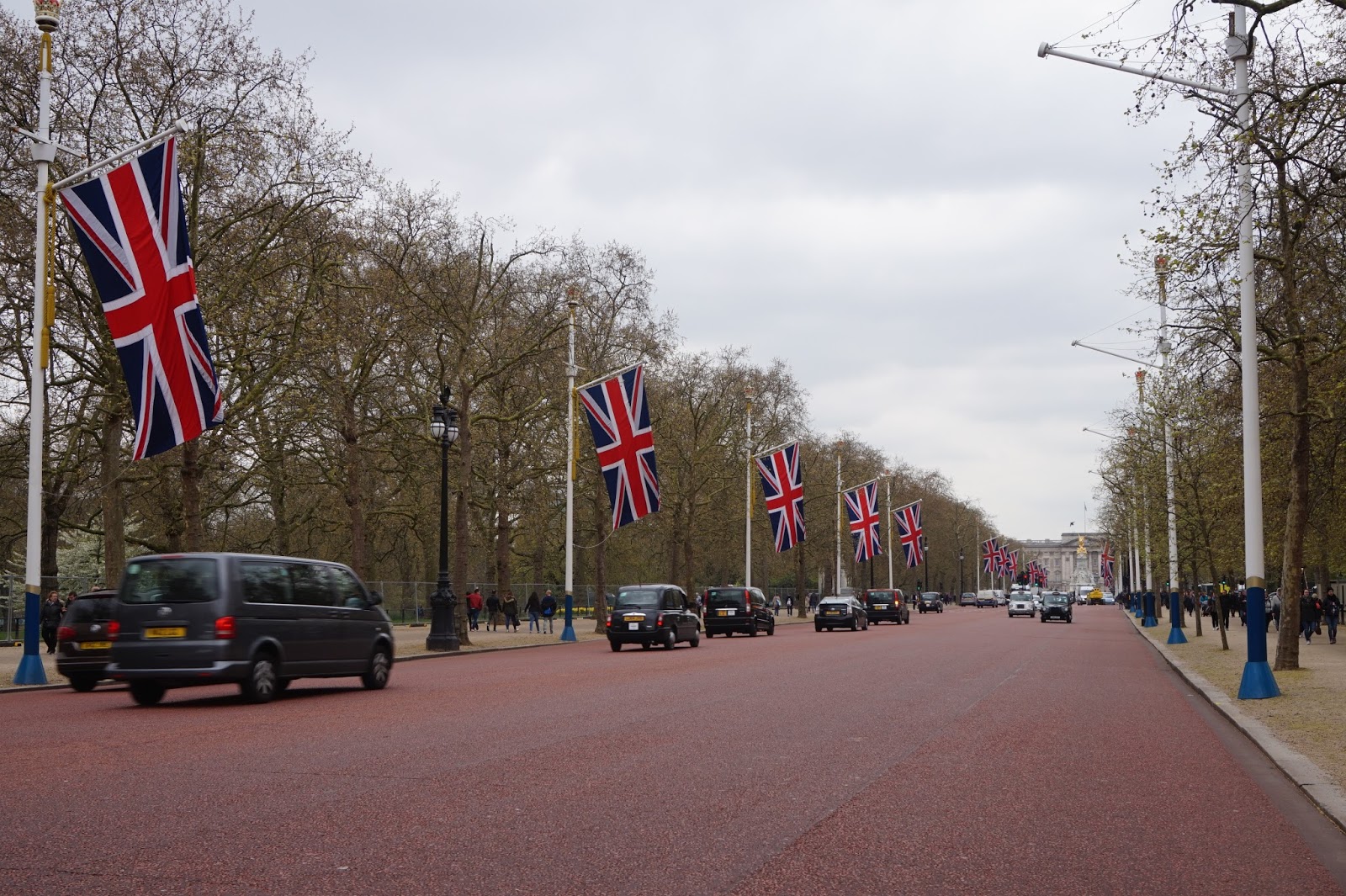
Sometimes they give public lectures here at the Royal Society, and I'd been watching their site for a number of months now to see if I could take in such a lecture while here, but nothing came up.  At the very least I wanted to walk past the building and take pictures.  It is located just off The Mall - just down from Buckingham Palace - across from St. James' Park but facing away from the park.  The address is 6-9 Carlton House Terrace.


Behind the Royal Society - looking down The Mall toward Buckingham Palace
I almost just took pictures and kept going, but after having been to the Royal College of Physicians earlier in the week and having seen the exhibit on John Dee there, I decided to walk in and just ask if they had an exhibit or anything.  I introduced myself as being on sabbatical relating to mathematics and wondering if they had any sort of exhibit.  Sure enough, there is an exhibit on Micrographia, which isn't math, but was as good an excuse as any to get through the doors!


It was actually quite interesting, and it involves the work of Robert Hooke - he of the long-standing feud with Newton (which you can read a little bit more about in my post on Newton), so there's at least a tangential math connection.  Also displayed was a bound copy of Newton's letters to the Royal Society outlining the main results of his study of optics, particularly with regard to light and color.


Hooke's illustrations of crystals of frozen fluids - later included in his "Micrographia"

The sketches below are by Anton van Leeuwenhoek - considered the first microbiologist and the Father of Microbiology.  The second image is a close-up of his signature.


Now some Newton items - though I don't know why the computer won't let me flip the following image.  Anyway, it is his collection of letters to the Royal Society outlining his optical work, and the following photograph is of wood from his famous apple tree shaped into a prism.


The origins of the Royal Society are in the 1660s.  The first "learned society" meeting took place following a lecture at Gresham College by Christopher Wren.   The group soon received royal approval from King Charles II and from 1663 was known as "The Royal Society of London for Improving Natural Knowledge."

The Royal Society's motto is "Nullius in verba," or "take nobody's word for it."  It is an expression of determination to withstand the domination of authority and to verify all statements by an appeal to facts determined by experiment.  The first issue of "Philosophical Transactions" was published in 1665; this established the important concepts of scientific priority and peer review, and it is now the oldest continuously-published science journal in the world.  Among other things, the society published Newton's Principia Mathematica,  Benjamin Franklin's kite experiment, the first report in English of inoculation against disease, and they approved Babbage's Difference Engine.*

Sir Isaac Newton served as president of the Royal Society from 1703 to 1727.  Other presidents have included Sir Christopher Wren, Samuel Pepys, Sir Humphry Davy, Thomas Henry Huxley, The Lord Lister, and Sir Ernest Rutherford.

More recently the society awarded Peter Higgs the Copley Medal - its oldest and most prestigious award.


Do you recognize the pattern in the door handles?


The Royal Society arose out of informal meetings at Gresham College - the same Gresham College that has been giving free public lectures in London for more than 400 years, one of which I was able to attend earlier this week at the Museum of London to hear Gresham Professor of Geometry Raymond Flood present a wonderful lecture on mathematicians Alan Turing and John von Neumann.  (I couldn't believe how packed the hall was for this mid-day, mid-week math lecture!  I was lucky to find a seat!)


Tuesday, April 12, 2016

Sir Isaac Newton

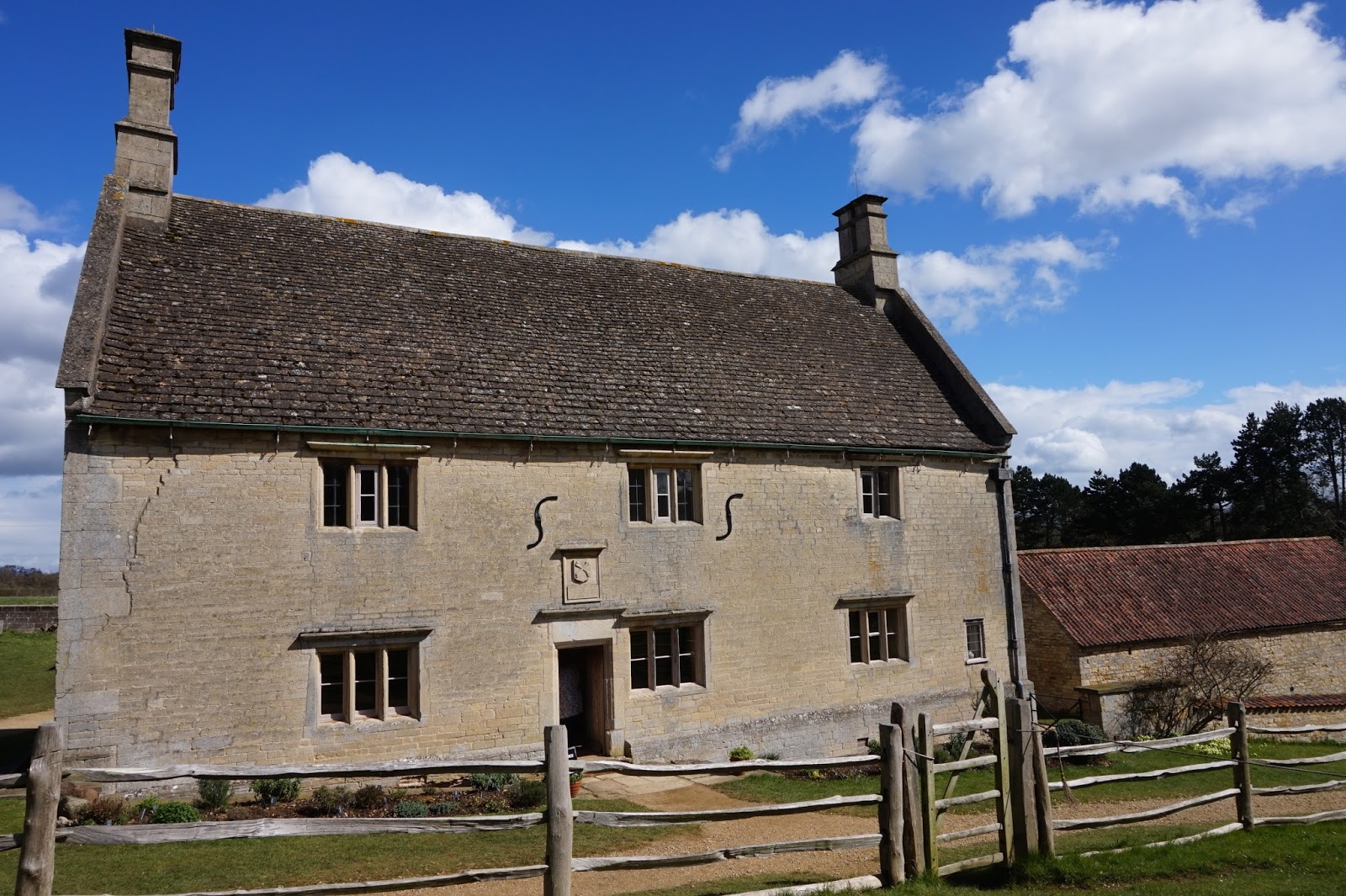
Woolsthorpe Manor - Home of Isaac Newton

The famed apple tree of which Newton told his story
Near Newton's rooms at Trinity, a descendant of the Woolsthorpe apple tree of which Newton told his story
I fear "story" is going to be the key word from here on out in my travels and in my posts - or that I may be sticking more with pictures that with text from here on.  Now that I am in Cambridge and have met up with Dr. Piers Bursill-Hall I have come to find out that much (most?) of what I "knew" of the history of mathematics is actually false!  So I'm trying to be as careful as I can (and am feeling far less confident) as I write.  To be learning what I am learning is both wonderful and terrifying.  Sadly I only have a few days with him.

I say story because toward the end of his life Sir Isaac Newton said and wrote much about his life that was simply self-aggrandizing.  It is from Newton himself that we have the story of the apple falling having inspired him to develop his gravitational theory, but just because he himself told it doesn't mean the event actually happened.  Nevertheless, as you can see from the pictures above, the tree, and it's descendants are honored.


It is quite certain that Newton's laboratory was on this spot at Trinity College, as when this ground was dug up in order to lay cables for the internet, soil samples were taken and a scary chemical "soup" was discovered when the soil was analyzed that indicates that he did, in fact, do his alchemical experiments here.

It is also the case that Newton writes of himself as being a complete autodidact, having made his advances in physics, optics, astronomy and calculus in the isolation of his home in Woolsthorpe when the university was closed due to the plague.  We now know, however, through the meticulous work of mathematical historian Tom Whiteside, that Newton spent time back in Cambridge when he was supposedly home and that he had the whole of what is now the Wren Library pretty much to himself.  This doesn't change the fact that he made a giant leap forward from reading the arithmetical works of John Wallis and jumping to the forefront of cutting edge mathematics quite suddenly.

From the museum at Woolsthorpe

First Edition of Newton's Principia with his notes in Latin (left) for the second edition (Cambridge U. L.)
Newton was many things, a natural philosopher, an alchemist, President of the Royal Society, warden and master of the Royal Mint.  He wrote about biblical chronology.  He invented calculus.  I also have it on good authority that he is not someone you would have wanted to invite home to dinner - have heard multiple stories of his nastiness of which I will share only one.  Newton is well-known for having written (or quoted), "If I have seen farther than others it is because I have stood on the shoulders of giants."  I had always loved that about him - his humility in giving honor to those who had gone before.  It turns out, however, that Newton had a long-standing feud with Robert Hooke, who was a very short man, so this was actually a pointed insult.  (That's actually the tamest nasty story I can tell; the others might make people lose sleep, so I'll let those go.)

To be fair I should share that Newton had a pretty rough start in life.  His father died about 3 months before his birth.  In fact, the father's death and Newton's baptism are to be found on the same page of the registry of the parish church.  Newton was born on Christmas Day, 1642 (according to the Julian calendar, which was in use at the time).  He was born prematurely and was very small; his mother is reported to have said he would have fit in a quart jug.  His mother remarried when he was 3 years old, leaving him with his maternal grandmother.  Eventually his other was widowed again, and she had a strong desire for Newton to become a farmer.

One thing that keeps sticking out in my mind, as I think about the chemically still-tainted ground where his lab once stood and the other sorts of things that he did (such as sticking a bodkin, a long, flat needle, behind his eye to see what changing the shape of the eyeball would do to vision) - along with his rough start in life and the life-expectancy when he lived - and the fact that he would go without eating or sleeping for long periods of time when he was in the middle of focused work - is how on earth he lived to the ripe old age of 84.  But those I am with tell me that it is probably because he never had any stress in his life - that he made life stressful for everyone around him, but that he never had any stress.

He accomplished amazing things - as poet  Alexander Pope said of him:


NATURE and Nature’s Laws lay hid in Night:
God said, “Let Newton be!” and all was light.


Like I said, I am learning a lot, which is wonderful, but also scary - am needing to rewrite a lot of narratives in my own head about mathematics history in general and about biographies of mathematicians specifically.

Here are more pictures associated with this fantastically brilliant, but not very genial, man:

Woolsthorpe Manor

View out the front door of Woolsthorpe Manor

Newton's bedroom (not original furnishings)

Newton's bedroom (not original furnishings)

View of THE apple tree from Newton's bedroom window

Room where Newton was born (not original furnishings)

Room where Newton was born (not original furnishings)

Newton's notes on his experiments into the nature of white light

This was definitely still a time of superstition as well as a time of the progress of science, as the next two pictures show.

How table would have been set - spoon "upside-down" so that the devil couldn't sit in it and go into your mouth
Geometrical shapes carved into the dining room wall to keep witches out (I saw this same thing in Lincoln cathedral)
Woolsthorpe Manor from the back (you never see this view!)
Newton's Church in Costleworth-by-Woolsthorpe

Entering

Been around a while


Font where Newton was baptized


Here I am where I said I would be in my sabbatical proposal!


Monday, April 11, 2016

Cambridge

Punting on the Cam - The Bridge of Sighs


I haven't been sure where to begin with my time in Cambridge, and I figured punting was as good as anything.  It's sort of classic, and it shows of the colleges of Cambridge University well.

As I write this I am sitting in the Centre for Mathematical Sciences, Cambridge - in the common room of one of the pure math pavilions with a bust of Ramanujan overlooking my work.  I don't know how anyone could possible beat that situation!

Before leaving on my sabbatical travels I wrote a professor here, Dr. Piers Bursill-Hall, with one question about the location of rooms of two mathematicians I was particularly interested in: John Edensor Littlewood and G. H. Hardy.  I'd been told he'd be the best person to ask.  Rather than receiving just an email answer I have been hosted in the most gracious and solicitous manner imaginable - so much so that I'm feeling almost too humbled and awed to really write much about it at this point.  I'm still pinching myself and wondering if this is real.

He first connected me with one of his doctoral students, Richard Chapling, who is in maths at Trinity College and who is very knowledgeable about Hardy, among many other things.  Richard pointed out places and items related to Newton, ushered me into the Trinity Great Court in time to hear the famous clock chime noon, showed me various of Littlewood's, Hardy's and Ramanujan's room locations from over the years (there was some moving around), and then treated me to lunch in Trinity's hall, which just about knocked my socks off as I sat under the hammer beam roof and under the gaze of Henry VIII.  When the three of us were having dinner together the next day I remarked on what a privilege that was for me, Piers said, "No big deal.  Hardy ate there every day."  To which I replied, "Yes!  EXACTLY!"

To make a very long story short, on Friday after the tour and lunch at Trinity, Piers met up with me and Richard and took us to Ely Cathedral, which was fascinating.  Saturday involved visits to many of the colleges and chapels - concluding with my first visit to the Centre for Mathematical Sciences, time to work here, take-out Chinese in "The Core," and lots of stories told.  Today involved an amazing visit to James Clerk Maxwell's laboratory (lots of stories about that - what a privilege! - same lab bench still there that Maxwell, Rutherford and Einstein taught on), a second visit to King's College Chapel, finally getting in to Trinity College Chapel, time in Clare, St. John's, etc.  And now back to the CMS where Piers and Richard are working in the office on their stuff while I work alone in the common room on this.

ASTOUNDING!

I'm here in Cambridge because of the "non-trivial" number of phenomenal mathematicians (and mathematical physicists and mathematical philosophers) throughout history that are associated with Cambridge, and particularly Trinity College, Cambridge - people such as the following:

Charles Babbage
Mary Cartwright
Arthur Cayley
Augustus de Morgan
Paul Dirac
William Timothy Gowers
G. H. Hardy
James Jeans
John Maynard Keynes
John Edensor Littlewood
James Clerk Maxwell
Sir Isaac Newton
Roger Penrose
Srinivasa Ramanujan
Bertrand Russell
Peter Swinnerton-Dyer
Sir George Gabriel Stokes
James Joseph Sylvester
Alan Turing
John Venn
John Wallis
Alfred North Whitehead
Andrew Wiles

  .  .  .  to name a few.

I'm having rather a hard time processing all the information I've taken in in the last few days, so I think for now I'll just post some pictures of Cambridge and will try to sort things out into separate posts later.

Newton's Apple Tree at Cambridge - a descendant of the one at his home in Woolsthorpe

Trinity Great Gate with founder Henry VIII holding a rather interesting scepter
This fountain in the middle of the Great Court has been here since before Newton's time

Trinity Clock Tower (Chapel to the right)
Statue of Newton in Trinity College Chapel


A few plaques among many in Trinity's chapel - 


Wren Library, Trinity College, Cambridge (from Nevile's Court)
King's College Chapel

King's College Chapel
Detail of King's College Chapel (west door)

Inside King's College Chapel
Henry Rex
H&A - didn't work out so well for A
Fan Vaulted Ceiling of King's College Chapel

Fan Vaulted Ceiling of King's College Chapel
Here are some images of James Clerk Maxwell's laboratory/lecture hall.  My host taught in this room for 20 years, but it has now been taken over by Sociology <gasp> because physics was more interested in nice new rooms than this sacred history.  It was recently used for storage space and now is not being used for anything.  Maths faculty is hoping it is not gutted in a couple of years to make a modern classroom  .  .  .


Trap doors in the ceiling allowed things to be lowered in.

Original bench over which Maxwell, Rutherford, Einstein and Bursill-Hall taught
Student's-eye View - Dr. Bursill-Hall at front
There are MANY more Cambridge photos I could share, and some of the ones I have shared I probably should have waited with until I wrote on specific mathematicians, but this is just all too cool not to jump in right now and post all this.

Oh - one last closing shot - about to go under the Mathematical Bridge on the punt - couldn't be happier: