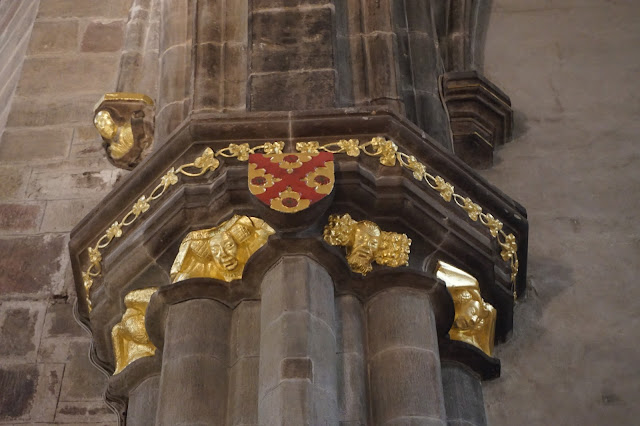
Since my first sabbatical in 2016, I have been to Edinburgh an astonishing (to me) five times. John Napier has become a major focus for me, and as I've traveled back again and again I've been able to extend the range of my search for Napier-related items and places. Although this was my fifth trip, I found additional things that were new to me in Edinburgh itself. One of these items is something I'd been aware of before but hadn't been able to find easily. It is the sculpted head of one of Napier's ancestors that adorns one of the pillars in St. Giles Cathedral. I'm kind of surprised I hadn't seen it before since I am familiar with the Napier family coat of arms, but I guess the east window, which it is directly next to, usually commands my attention when I am in this end of the cathedral.
 |
| Napier Pillar, St. Giles Cathedral |
 |
| Napier Pillar, St. Giles Cathedral |
According to author Lynne Gladstone-Millar in the book
John Napier: Logarithm John, this sculpture is of John Napier's ancestor Sir Alexander Napier who had "donated generously to the embellishment of St. Giles' Cathedral in 1460" and had commissioned this.
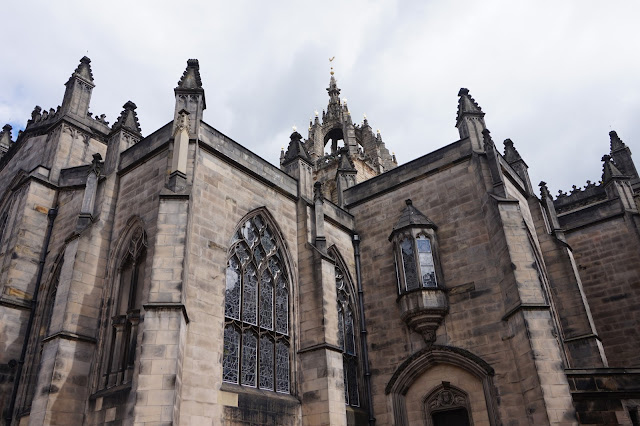 |
| St. Giles Cathedral from the southwest |
This time, rather than just wandering around and looking at all the pillars, I asked a guide if he knew were to find the sculpture. This ended up being more beneficial than I had expected, as he also told me about a stained glass window that featured a Napier. This window is in a side chapel in which James Graham, the Marquis of Montrose is buried. The window honors those who supported him.
 |
| Tomb of Montrose |
 |
| The poem on the tomb was written by Montrose himself. |
Napier is in the top right-hand corner. This is either the son or grandson of John Napier. I need to do a little more digging to find that information. There is no date or first name here. The dates for Montrose are 1612-1650, which seems to me would fit best with a grandson in terms of dates and age . . . whether son or grandson, the name would have been Archibald Napier. Both did fight with him, and Alexander, the first Lord Napier (John's son) was 70 years old at the time. Maybe it honors them both.
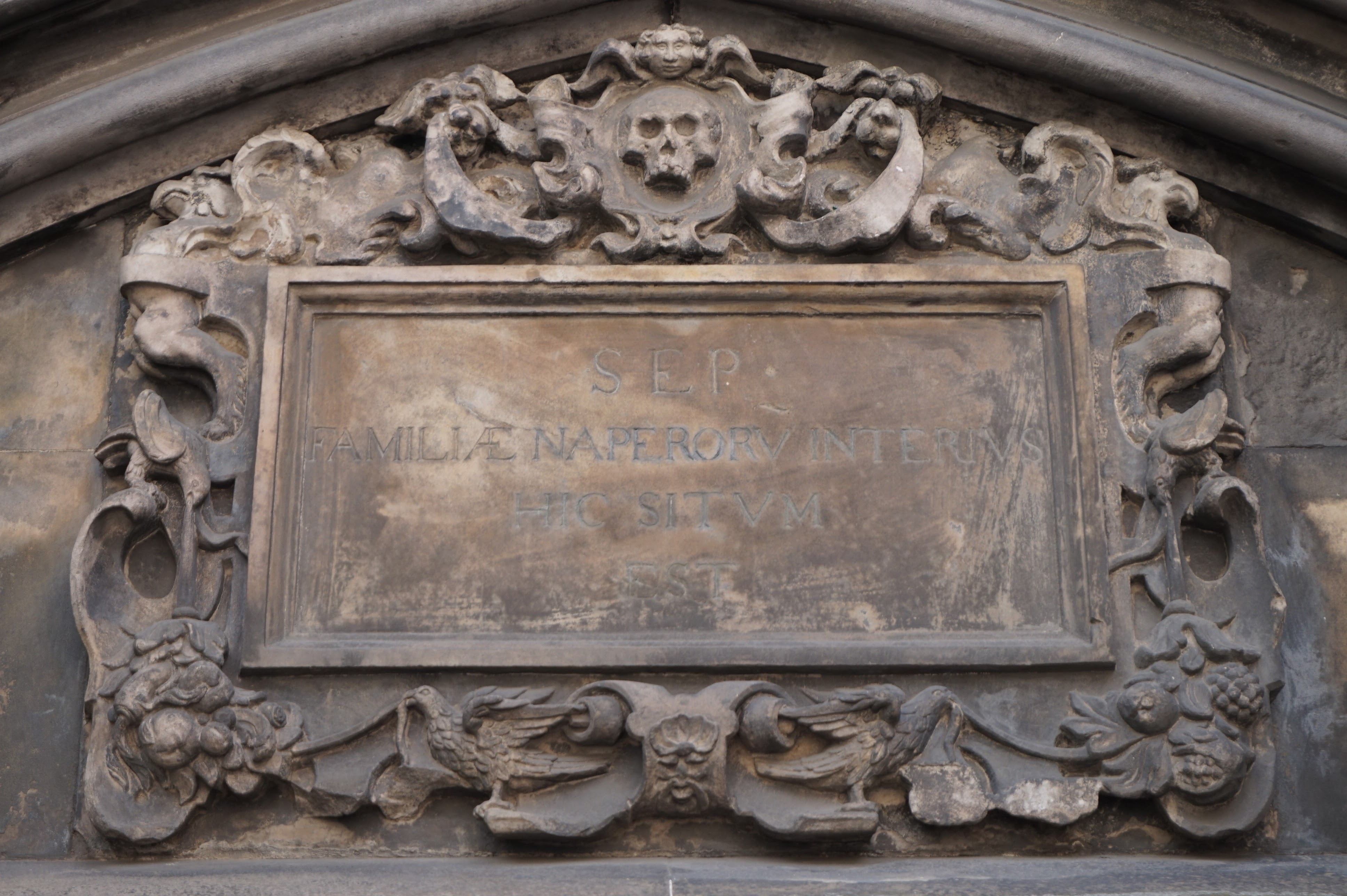
Heading back out, I visited the Napier memorial plaque on the exterior of the cathedral. I'd seen this before. I think I've posted it already as well, but I'm not sure in which post, so I'll include it here as well. This is on the northeast of the cathedral.
SEP
FAMILIAE NAPERORV INTERIVS
HIC SITVM
EST
Because of this inscription, many think that John Napier is buried at St. Giles, but the more reliable information points to him being buried at St. Cuthbert's Parish Church, the church at which he served in the position of elder. It is the case that St. Giles was historically where family members, his ancestors, would have been interred.
From here I headed out to Merchiston Tower on the campus of Edinburgh Napier University, Merchiston Campus in order to find the remains of a 16th-century gate that I had not noticed on previous visits but have since learned of. I'm always looking for things that given me a better view of the lives of the mathematicians I'm studying, no matter how small a glimpse it may be.
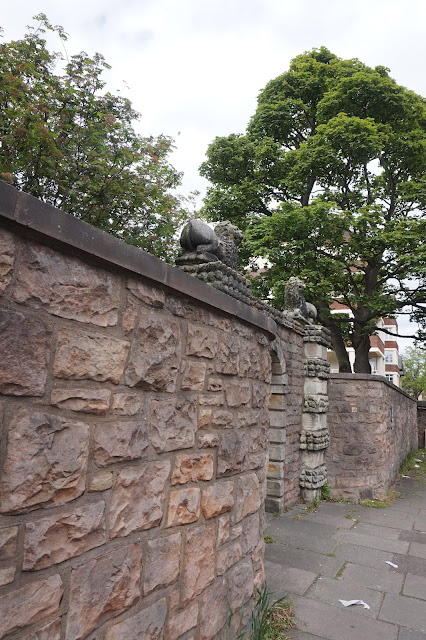 |
| Merchiston Tower Gate |
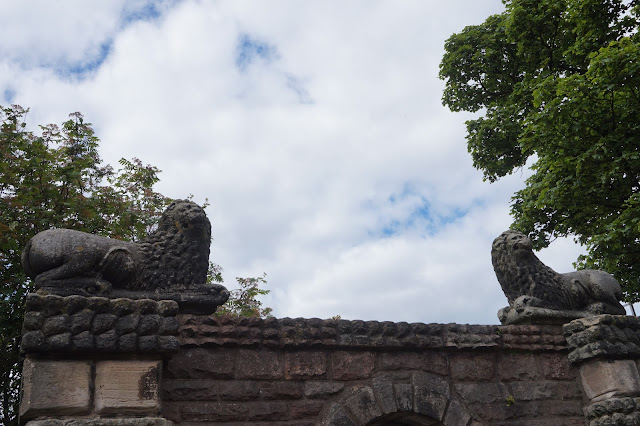 |
|
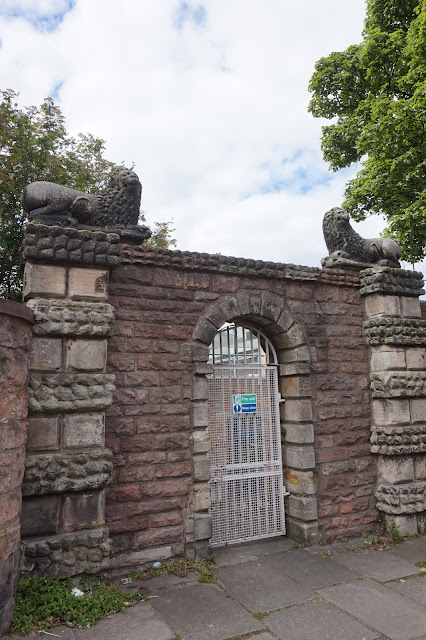 |
|
I realize now that I added some of these photos to an earlier post, a post on Merchiston Tower from when I had a guided tour inside. That post with pictures of the interior and a map to where the gate is can be found at
this link. I did pop inside while I was here and revisited the Napier bust and the Napier display.
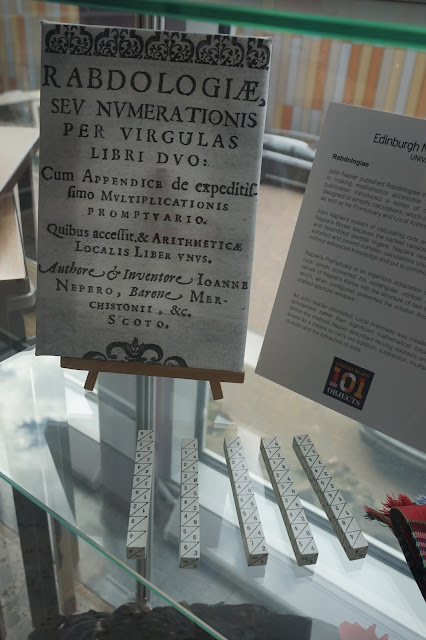 |
| Napier's Rods - Modern Replica |
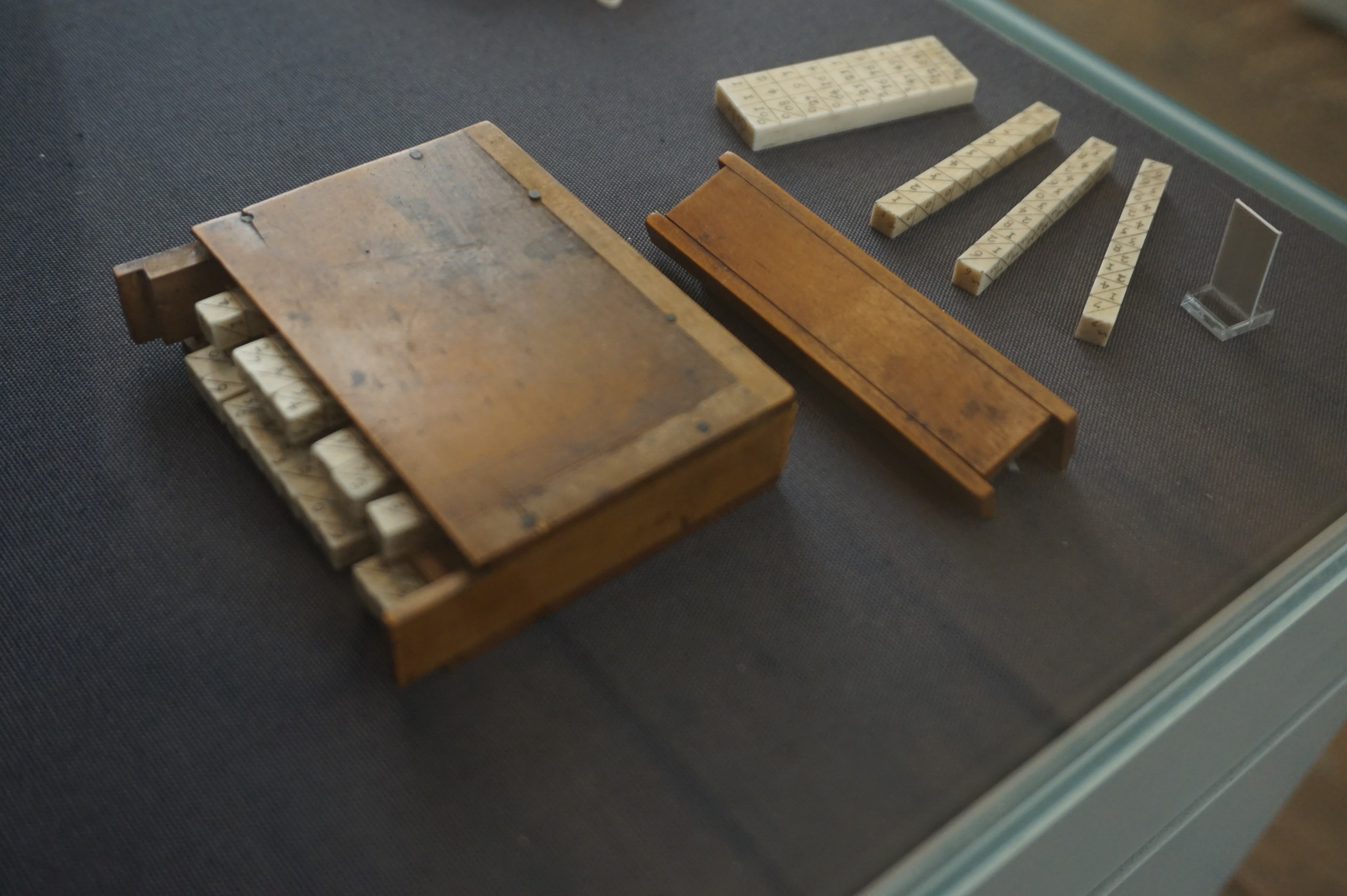
I've explored and seen so many "Napier things" since I began studying his life and work 6 years ago that I know it's a repeat to share Napier's Rods (Napier's Bones), but on this recent trip I did see displays that I had not seen before that contain Napier's Rods. The fact that nearly every science museum I have ever visited throughout the UK and also in Paris contain sets of these rods that are hundreds of years old serve as testimony to me of their widespread and long-term use. One place on this trip where I saw rod displays was at the History of Science Museum in Oxford.
Sometimes the rods are flat and single-sided. Sometimes the rods are four-sided rectangular prisms. They can be made of any number of materials, such as wood, ivory, or silver, and are generally held in a specially made carrying case.

The large rod on the right below is used for taking cube roots. On the back are the necessary markings for taking square roots.
Of course, Napier's invention of logarithms was also used to create a device to speed up calculations, a device known as a slide rule. Napier published his logarithms in 1614, and by the 1620s these were already being put into the physical form of a slide rule. These were widely used for calculation from the time of their invention until pocket calculators became widely available in about 1974. A 350-year-long run seems like a goodly span of time for a calculating device!
I'm realizing as I create this post that I have not posted about my time in St. Andrews in August 2021. Here too I found a museum display (Wardlaw Museum) featuring Napier and Napier's Bones.
I visited St. Andrews because Napier was a student at the university there (though briefly). As I continue to document Napier items and Napier places I'll have to be sure to write a post about that visit, but for today it's time to wrap up the writing!